

One of the fastest ways to create frustration in a partnership, a team, or even a family is to assume everyone should contribute in the same way.
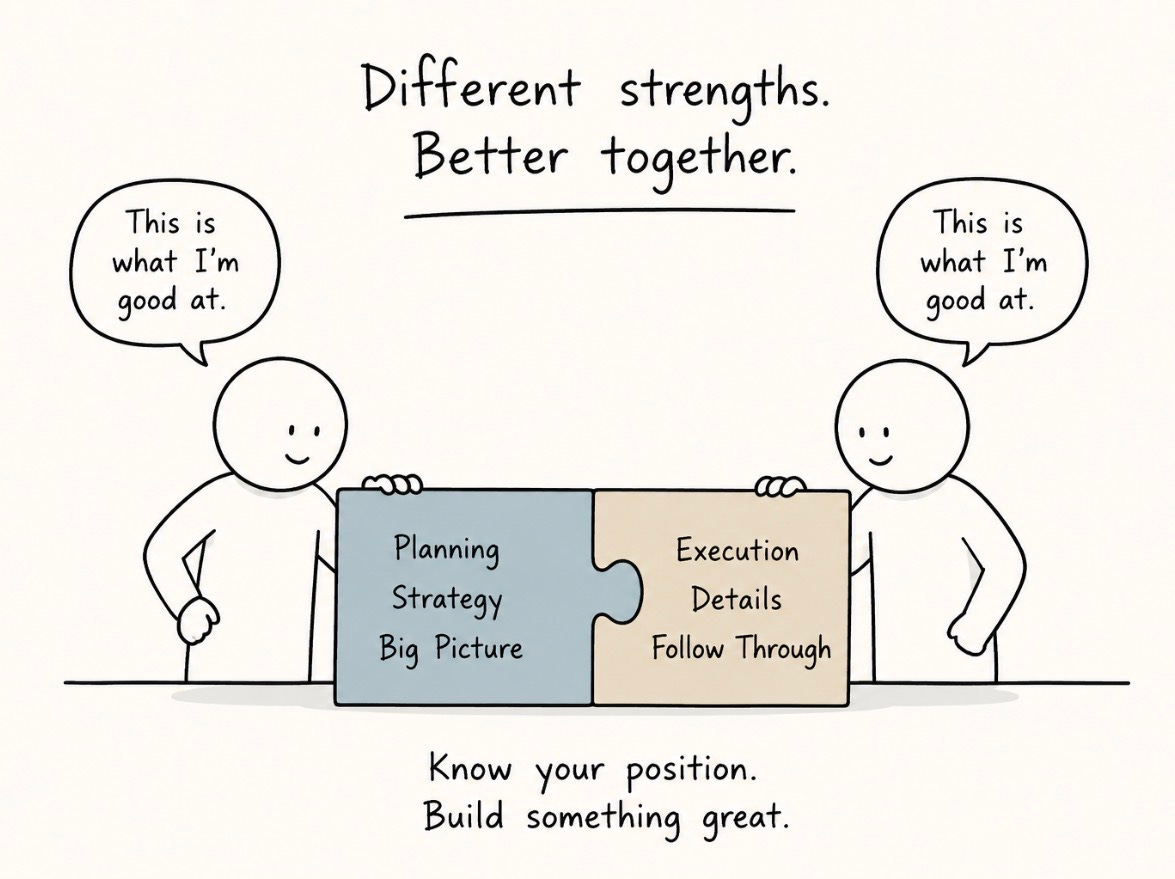
They shouldn’t.
Every person brings different strengths, weaknesses, experiences, and interests. The problem is that these things often remain invisible. When they are invisible, people begin overlapping responsibilities, stepping on each other’s work, or expecting someone to perform tasks they were never well-positioned to do.
This is where many partnerships fail.
Imagine two people trying to accomplish a goal together. Before discussing tasks, deadlines, or expectations, they should answer a few simple questions:
What am I good at?
What am I not good at?
What is my partner good at?
What does my partner struggle with?
Where do our strengths complement each other?
Where do they overlap?
These questions are not about judging one another. They are about positioning.
When strengths become visible, work naturally begins to organize itself. The person who communicates well can lead communication. The person who excels at planning can build the plan. The person who enjoys details can focus on execution.
Instead of competing for control, each person gains ownership over the areas where they contribute the most value.
The result is not only better performance but also a healthier relationship.
Many people say, “Communication is key.”
What they often mean is that strengths, weaknesses, expectations, and responsibilities need to be made visible.
Communication is not simply talking more.
Communication is creating clarity.
When people understand their position and the position of those around them, trust grows. Less energy is spent correcting mistakes, defending decisions, or fighting over responsibilities.
The team succeeds together.
And when success comes, nobody needs to act like a tyrant, control every decision, or claim all the credit.
They can proudly say they accomplished it as a team.
Because they did.
Positioning is not about controlling people.
It is about understanding where people are strongest and allowing them to contribute from that position.