

Marcus and Daniel graduated the same year, from the same university, with the same degree.
Same GPA. Same ambition. Same starting point.
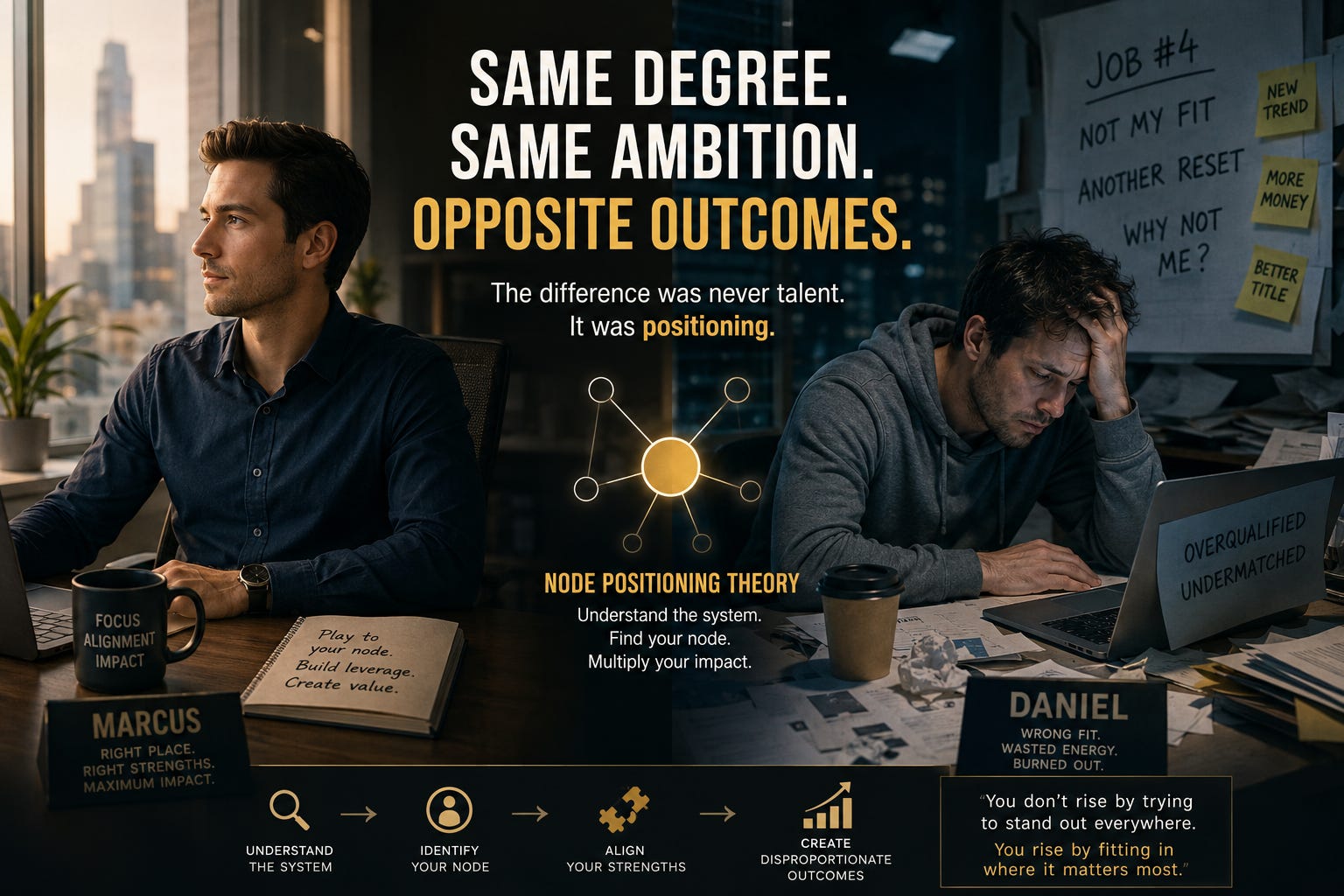
Ten years later, Marcus is a senior analyst at a firm he respects, earning well above average, working on problems that genuinely interest him. He is not famous. He is not a CEO. But he is exactly where his strengths can do the most damage — in the best possible way.
Daniel is exhausted. He has switched jobs four times, chased two trends that paid off for other people, and is currently grinding in a role he is overqualified for and undermatched for. He works just as hard as Marcus. Some weeks, harder.
The difference between them is not talent. It is not work ethic. It is not luck, though Daniel tells himself it is when the lights are off.
The difference is in positioning.
Marcus — without ever having a word for it — made a series of decisions early on that placed him inside a system where his specific strengths were exactly what was needed. He did not chase what everyone else wanted. He identified, almost instinctively, where he fit. And then he moved toward it deliberately.
Daniel did what most people do. He followed the signals. He chased titles that sounded impressive. He entered spaces that were trending. He competed for roles that were visible — without ever stopping to ask whether those roles were actually right for him.
Two people. Equal ability. Opposite outcomes.
This is what Node Positioning Theory is about.
Not how to work harder. Not how to want more. But how to understand the system you are operating inside, identify where you genuinely fit within it, and stop wasting years competing for positions that were never meant for you.
Position affects outcome. Not eventually. From the beginning.
And the first step is becoming conscious of a process you are already inside — whether you realize it or not.
Marcus and Daniel are fictional characters used to illustrate the framework.