

You have heard it before.
Wake up at 5am.
Sleep less.
Grind harder.
Outwork everybody.
And people follow it faithfully.
They force themselves into routines built from somebody else’s life — somebody else’s schedule, responsibilities, energy levels, opportunities, and position.
Then when it does not work, they blame themselves.
That is the part nobody talks about.
The problem is not that hard work is fake.
The problem is that the definition you were given was never yours to begin with.
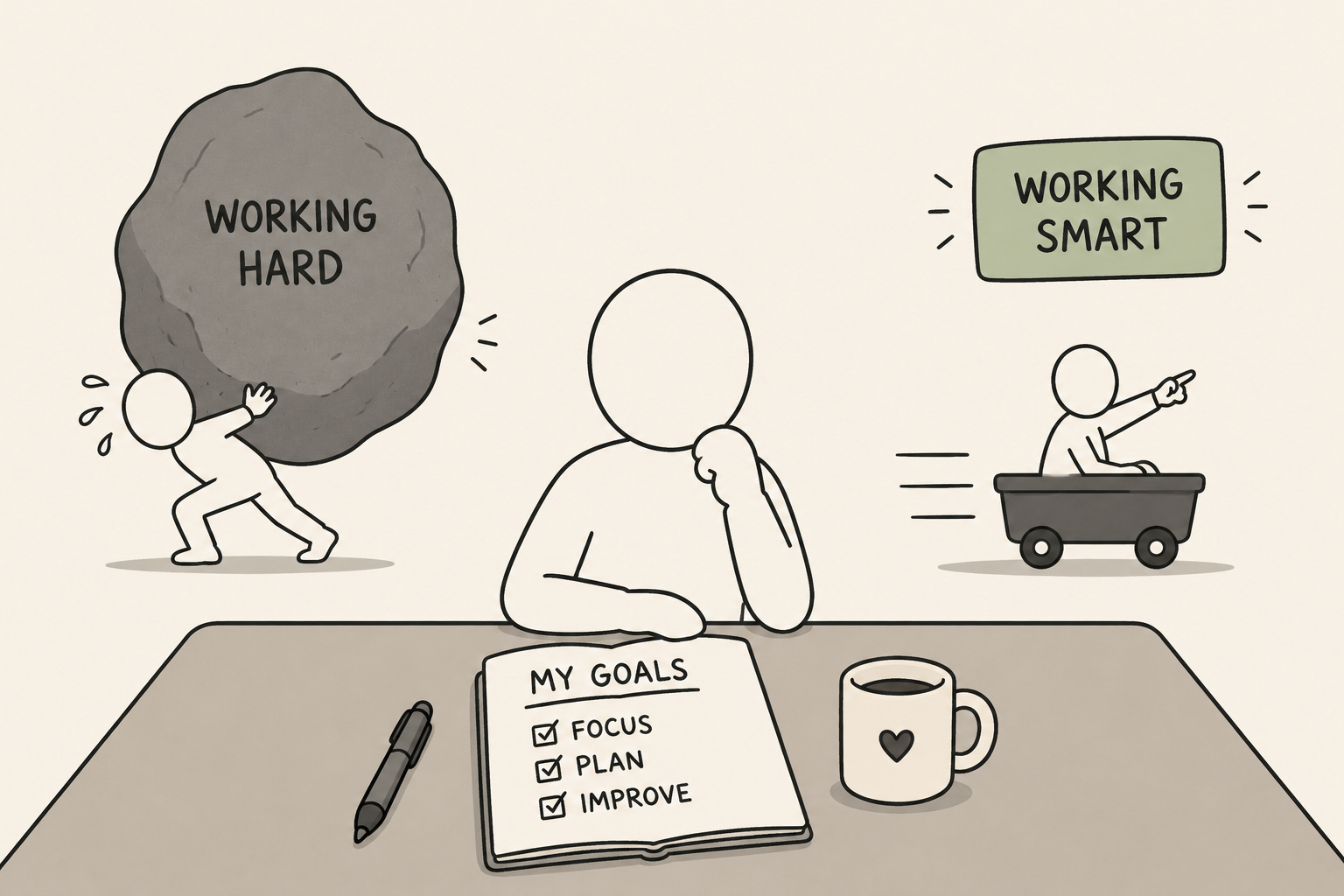
The Information That Got Us “Just Enough”
I followed concepts that other people placed into my mind.
I stayed disciplined. I stayed consistent. I kept moving.
And it got me just enough.
Enough to survive.
Enough to keep going.
Enough to stay in motion.
But never enough to truly move ahead.
Looking back, I understand why.
The advice was not wrong for the person giving it.
It was wrong for my position.
When someone tells you to work 16-hour days, they are describing what worked within their environment — their resources, their season of life, their goals, their sacrifices.
People hear it as universal truth when it was only personal truth.
And most people spend years applying someone else’s map to a completely different terrain.
That mismatch is where people get stuck.
Not because they are lazy.
Not because they lack ambition.
Because they are trying to win a race designed for somebody else.
“Do not follow anyone blindly. Follow your own set. Follow your own goal. Build steps that make sense for your position.”
What Hard Work Actually Means
Here is the definition nobody explains clearly.
We all receive the same 24 hours.
The difference is not time itself.
The difference is what gets created inside that time.
Hard work is not measured by suffering.
It is measured by meaningful output relative to your current position.
A person can spend 10 hours doing something inefficiently and call it dedication.
Another person spends 3 hours building a better system, automating repetitive work, learning a better method, or improving their process — and suddenly creates more value in less time.
Who worked harder?
Most people will emotionally choose the first person because suffering is visible.
But the second person expanded their capability.
That matters more.
Hard work is not just effort.
It is effort that increases your ability to produce, think, move, adapt, or create.
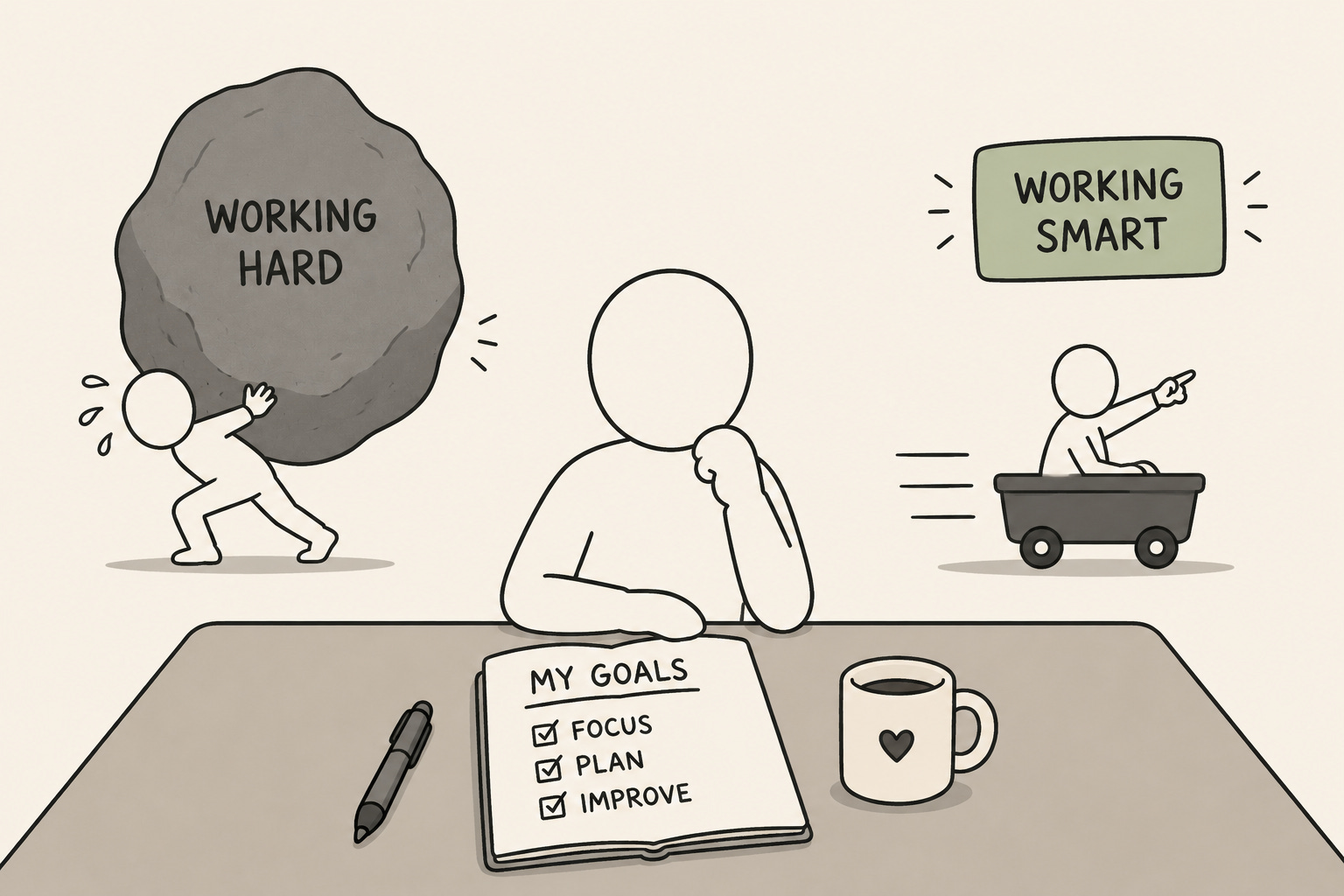
“Work Smart Not Hard” Misses the Point
People say:
“Work smarter, not harder.”
Others respond:
“No. Work hard AND smart.”
Both statements miss something deeper.
You cannot become smarter without effort.
Experience creates understanding.
But you also cannot keep calling something “hard work” if you refuse to improve your approach.
At some point, repeating the same inefficient struggle stops being discipline and becomes attachment to struggle itself.
Real growth is a cycle.
You work.
You learn.
You adjust.
You improve.
Then you produce more within the same amount of time.
Then you repeat the cycle again.
That is what sustainable hard work actually looks like.
Define What “Hard” Means for Your Position
A student studying all night before an exam is not necessarily working hard.
Sometimes they are simply overloaded without a system.
A worker burning out every week is not automatically disciplined.
Sometimes they are operating without direction.
Reaching your limit is not the same thing as building progress.
Real hard work begins when you identify what is genuinely difficult at your current level — mentally, physically, emotionally, professionally — and deliberately improve your ability within that area.
That is your hard.
Not somebody else’s.
Yours.
Then over time, you reduce friction.
You improve systems.
You recover time.
You recover energy.
And you use those recovered resources to build the next layer of your life.
That compounds for years.
Why This Matters
Too many people are exhausted because they are competing for positions that were never meant for them.
They are chasing lifestyles they never truly wanted.
Following routines copied from people whose lives look nothing like theirs.
And because of that, they constantly feel behind.
I followed that path too.
It kept me alive.
But survival alone is not the goal.
I believe people need to become conscious of their own position first.
Their environment.
Their strengths.
Their limitations.
Their responsibilities.
Their direction.
Because once someone understands their position clearly, hard work stops becoming random suffering.
It becomes intentional construction.
And a society full of people building intentionally instead of blindly reacting?
That changes everything.
The Only Thing I Want You to Remember
You do not need to compare your hours to somebody else’s.
You do not need to imitate another person’s suffering to prove your ambition.
Look honestly at the time you actually have.
Then ask yourself:
“Am I using my current position as effectively as I can?”
If the answer is yes, keep building.
If the answer is no, that is not failure.
That is awareness.
And awareness is where positioning begins.